Smart Energy-Saving Tips for Australian Homes
Rising energy prices are making many Australian households look more closely at where electricity is being used - and where it may be going to waste.
Aug 6, 2026
News

Smart Energy-Saving Tips for Australian Homes
Rising energy prices are making many Australian households look more closely at where electricity is being used - and where it may be going to waste.
The good news is that improving energy efficiency does not always require major renovations, expensive upgrades or big lifestyle changes. In many homes, meaningful savings can come from a combination of simple habits, better use of heating and cooling, smarter appliance use, improved insulation and more thoughtful home control.
This guide shares practical energy-saving tips for Australian homes, with a focus on reducing waste, improving comfort and making smarter decisions around the areas that often use the most power.
Quick Answer: What Are the Best Ways to Save Energy at Home?
The best place to start is with the areas that usually use the most energy.
For many Australian homes, heating and cooling are among the largest contributors to household energy use. Depending on the climate zone, heating and cooling can account for 20% to 50% of energy used in Australian homes. This means small improvements to how you cool, heat, zone and insulate your home can have a major impact over time.
Here are some of the most effective ways to reduce energy waste at home:
Energy-saving action | Cost | Effort | Potential impact |
Set sensible air conditioning temperatures | Free | Low | High |
Use zoning to avoid cooling or heating unused rooms | Varies | Low–Medium | High |
Clean air conditioning filters and keep vents clear | Free–Low | Low | Medium–High |
Seal draughts around doors and windows | Low | Low–Medium | Medium–High |
Use blinds, curtains and shade strategically | Free–Low | Low | Medium |
Switch off standby power | Free–Low | Low | Low–Medium |
Upgrade to LED lighting | Low | Low | Medium |
Use appliances efficiently | Free | Low | Medium |
Track your energy use over time | Free | Low | Medium |
The key is not one single change. It is building a home that wastes less energy every day.
1. Start With Heating and Cooling
If you want to reduce power bills, your heating and cooling habits are one of the best places to start.
Air conditioning is often used heavily during Australian summer and winter extremes. The challenge is that many homes are cooled or heated more broadly than they need to be. Empty bedrooms, unused living areas and poorly sealed spaces can all increase wasted energy.
To reduce heating and cooling waste:
Close off rooms you are not using.
Avoid extreme temperature settings.
Use fans to help circulate air.
Keep filters clean.
Make sure vents are not blocked.
Use zoning where available.
Improve insulation and draught sealing.
Use curtains, blinds and shading to reduce heat gain and loss.
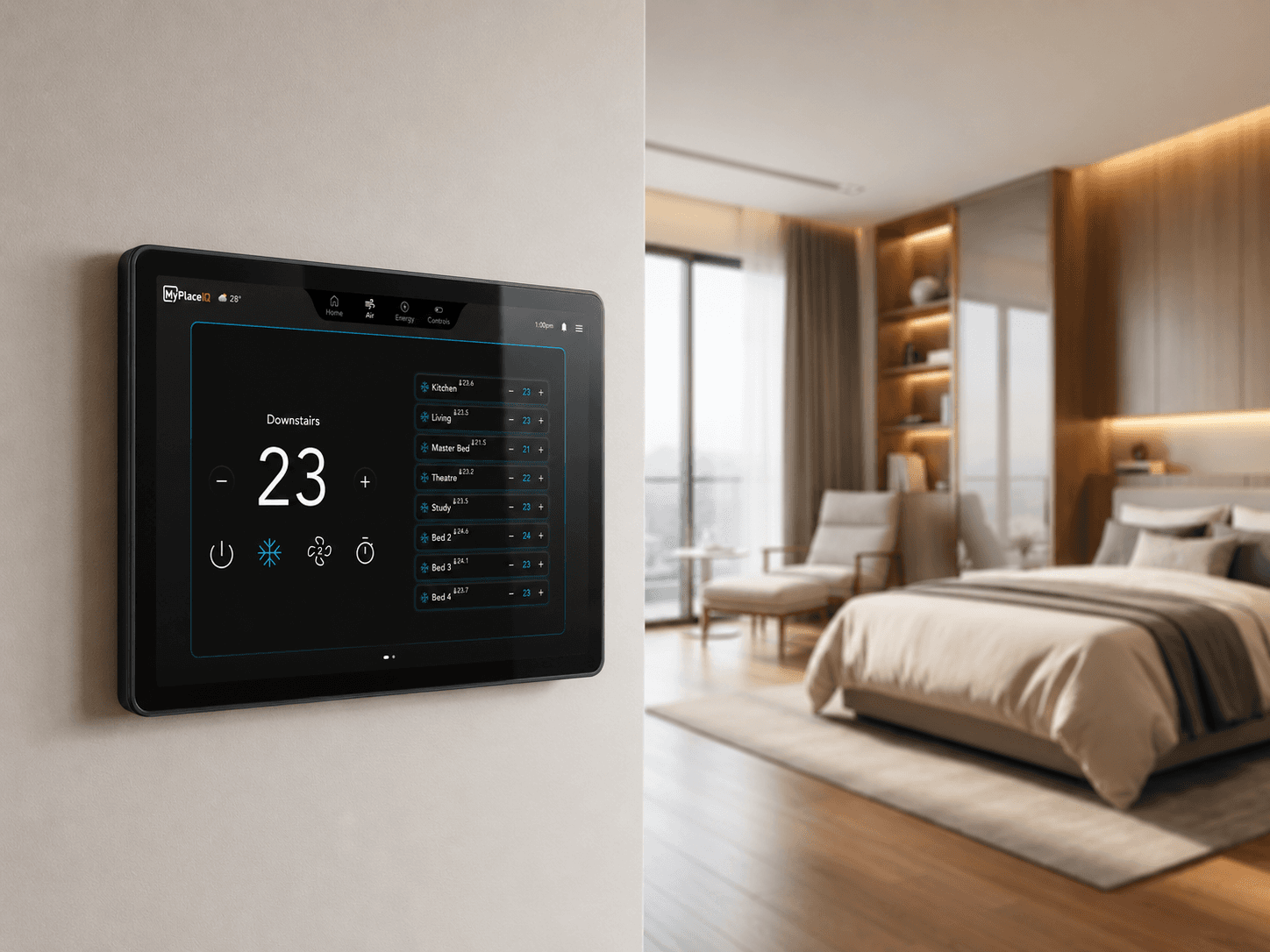
For ducted air conditioning, zoning can make a significant difference. Instead of cooling or heating the entire home the same way all the time, zoning allows different areas to be controlled separately.
2. Use Smart Zoning to Avoid Wasted Energy
Most households do not use every room in the same way at the same time.
You might use the kitchen and living room during the day, bedrooms at night, and a study or media room only at certain times. If your air conditioning system treats every area the same, energy may be wasted in rooms that are not being used.
This is where smart zoning can help.
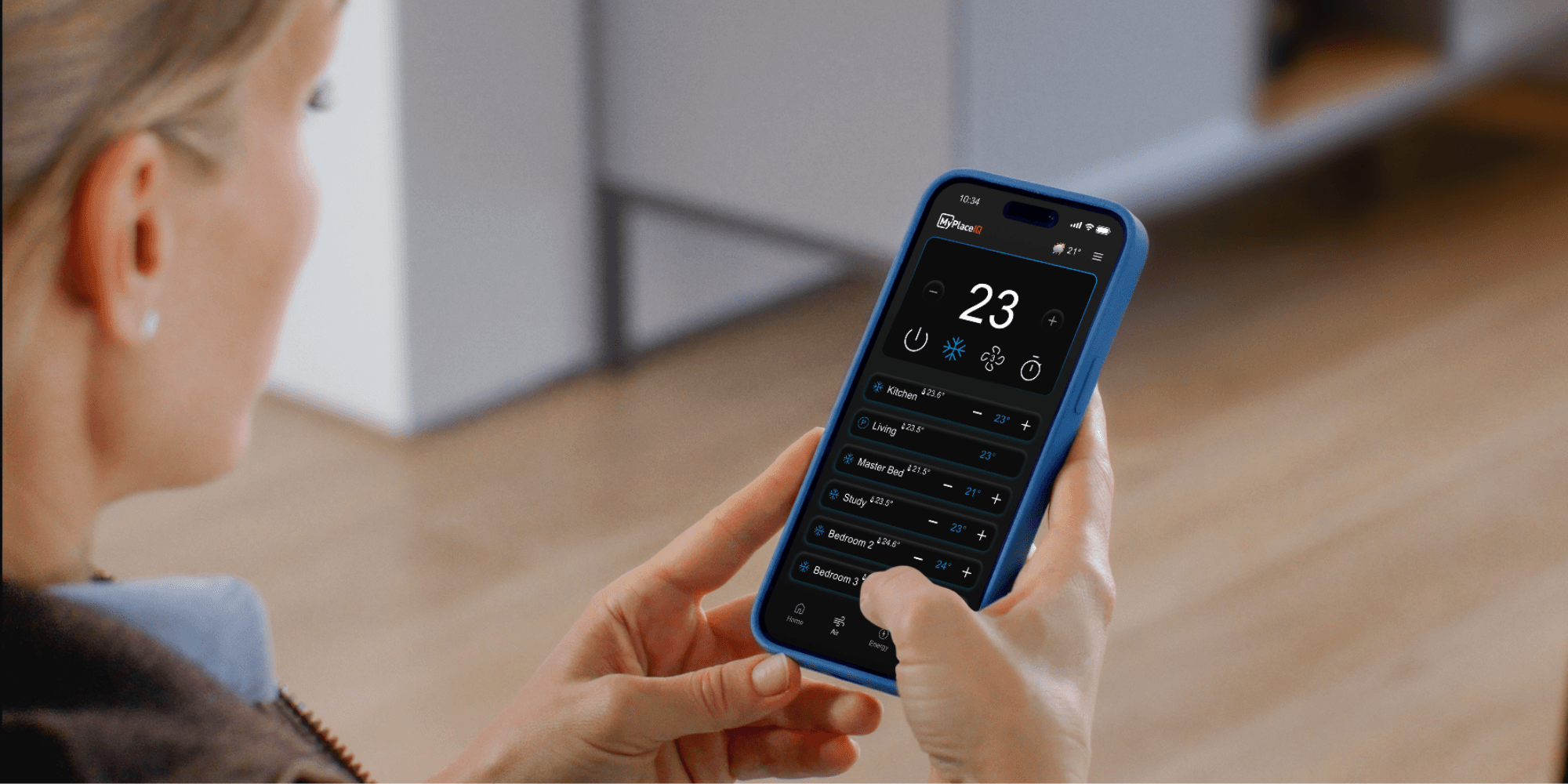
With MyPlaceIQ, homeowners can control up to 10 zones from the MyPlaceIQ app, making it easier to tailor comfort around the way the household actually lives. You can cool or heat selected areas, create schedules and adjust settings from your smartphone.
For example, you may want to:
Cool the living areas during the afternoon.
Keep bedrooms comfortable overnight.
Turn off unused rooms.
Pre-cool the home before arriving.
Adjust zones from your phone instead of relying only on wall controls.
Smart zoning does not mean sacrificing comfort. It means using energy more intentionally.
3. Set Sensible Air Conditioning Temperatures
Extreme temperature settings can make your air conditioning system work harder than necessary.
As a general guide, many Australian households aim for:
24–26°C for cooling in summer
18–20°C for heating in winter
The right setting will depend on your home, climate, system and personal comfort preferences. However, setting the temperature too low in summer or too high in winter can increase energy use.
This section should stay brief, because we already have a dedicated article covering this topic in more detail.
For a full seasonal breakdown, read our guide to best air conditioner temperature settings for year-round energy savings in Australia.
4. Keep Your Air Conditioning System Maintained
A poorly maintained heating or cooling system can use more energy than it needs to.
Dirty filters, blocked vents and neglected components can reduce airflow and force the system to work harder. Regular maintenance helps support performance, comfort and efficiency.
Simple maintenance habits include:
Cleaning or replacing air conditioning filters regularly.
Keeping vents clear of furniture, rugs and curtains.
Checking that zones are opening and closing correctly.
Scheduling periodic professional servicing.
Looking out for unusual noises, weak airflow or inconsistent temperatures.
For ducted systems, it is also worth checking that ducts and vents are in good condition.
5. Improve Insulation and Seal Draughts
Heating and cooling efficiency is not only about the air conditioning system. It is also about how well your home holds temperature.
Poor insulation and gaps around doors, windows, vents or roof spaces can allow cooled or heated air to escape. This means your system has to work harder to maintain comfort.
Energy-saving fixes include:
Sealing draughts around doors and windows.
Using door snakes.
Checking gaps around skirting boards and exhaust fans.
Adding or improving ceiling insulation.
Using weather seals on external doors.
Checking ductwork for leaks where appropriate.
Draught proofing can help improve comfort by reducing uncontrolled air movement, while good passive design can reduce reliance on mechanical heating and cooling.
For more detail, see the Australian Government’s guide to passive design and Sustainability Victoria’s advice on draught proofing a home.
6. Use Curtains, Blinds and Shade Strategically
Windows can be a major source of heat gain in summer and heat loss in winter.
Simple window habits can reduce the load on your heating and cooling system:
Close blinds and curtains during hot afternoons in summer.
Open curtains during winter mornings to capture natural warmth.
Use external shading, awnings or eaves where possible.
Consider deciduous plants or trees for seasonal shade.
Close curtains at night in winter to help retain warmth.
Shading and window coverings are especially important in warmer climates, where keeping direct sun off windows can reduce the need for mechanical cooling.
For more detail, see energy.gov.au’s advice on summer energy savings and YourHome’s guide to glazing and passive design.
7. Switch Off Standby Power
Many appliances continue drawing power even when they are not actively being used.
TVs, game consoles, speakers, coffee machines, microwaves, chargers and home office equipment can all contribute to standby power use if left on around the clock.
To reduce standby energy waste:
Use power boards with on/off switches.
Turn devices off at the wall overnight.
Unplug rarely used appliances.
Group entertainment devices on one switchable power board.
Turn off chargers when not in use.
This is a simple, low-effort habit that can help reduce unnecessary electricity use over time.
8. Upgrade to LED Lighting
Lighting is one of the easiest energy-efficiency upgrades in the home.
LEDs use around 75% less energy than halogen light bulbs and last significantly longer, according to Australian Government energy guidance. They also produce less heat than halogens, which can help reduce cooling demand in warmer months.
Start with the lights you use most often, such as:
Kitchen lighting
Living room lighting
Bathroom lighting
Outdoor lights
Hallways
Home office lighting
9. Use Appliances More Efficiently
Appliances do not just use energy based on what they are. How you use them also matters.
Simple improvements include:
Running dishwashers and washing machines with full loads.
Using eco modes where practical.
Washing clothes in cold water where suitable.
Avoiding unnecessary dryer use.
Using lids when cooking.
Using smaller appliances, such as air fryers or microwaves, for smaller meals.
Running high-energy appliances outside peak times if your electricity plan rewards this.
When replacing appliances, check the Energy Rating Label. Higher-rated appliances can cost less to run over time, even if the purchase price is higher.
10. Make the Most of Natural Ventilation and Fans
Before turning on air conditioning, consider whether natural airflow can improve comfort.
Natural ventilation can be useful when outdoor conditions are cooler than inside the home, especially in the evening or early morning.
Try:
Opening windows on opposite sides of the home for cross-ventilation.
Using ceiling fans to circulate air.
Venting hot air once outdoor temperatures drop.
Closing windows and blinds again before the day heats up.
Using fans alongside air conditioning to improve perceived comfort.
Fans use far less energy than air conditioning and can help you feel cooler without needing to set the thermostat as low.
11. Be Mindful of Heat-Generating Appliances
Some appliances add heat inside the home, which can increase cooling demand during warm weather.
Ovens, clothes dryers, halogen lights and some electronics can all make rooms warmer. In summer, reducing indoor heat can help your air conditioning system work more efficiently.
Smart habits include:
Cooking earlier in the day or later in the evening.
Using outdoor cooking where practical.
Air-drying clothes instead of using the dryer.
Using lids on pots and pans.
Choosing smaller appliances for smaller meals.
Replacing halogen lights with LEDs.
The less unnecessary heat you create indoors, the less cooling your home may need.
12. Monitor Your Energy Use Over Time
Energy efficiency is not a one off task. It is an ongoing habit.
Reviewing your electricity use can help you understand what changes are working and where your biggest seasonal spikes occur.
You can:
Compare bills across seasons.
Track usage after major changes.
Review peak and off-peak usage if your plan includes time-of-use pricing.
Look for sudden increases in consumption.
Adjust air conditioning schedules as routines change.
Review how often different rooms or zones are being used.
Homes that actively manage energy use are better placed to reduce waste than homes relying only on “set and forget” habits.
Smarter Energy Use Starts With Smarter Control
Reducing energy waste does not mean sacrificing comfort. The most effective homes combine good habits, efficient appliances, better insulation and smarter control.
For Australian households, heating and cooling are often one of the biggest opportunities. By using sensible temperatures, maintaining your system, improving insulation and controlling which rooms are being conditioned, you can make your home more comfortable and efficient.
With MyPlaceIQ, homeowners can take this further by controlling up to 10 air conditioning zones from the app, helping tailor comfort to daily routines while reducing wasted energy in unused areas.
Ready to make your home more comfortable and energy efficient?
Find a local MyPlaceIQ installer and discover how smart zoning and app-based air conditioning control could help your household use energy more intelligently.