Ducted vs Split System Air Conditioning: Which Is Better for Your Home?
Choosing between ducted vs split system air conditioning is one of the biggest decisions Australian homeowners face when upgrading their home comfort.
Both systems can cool and heat your home, but they work in very different ways. The right choice depends on your home size, layout, budget, lifestyle and how much control you want over different areas of your home.
July 9, 2026
News

Ducted vs Split System Air Conditioning: Which Is Better for Your Home?
Choosing between ducted vs split system air conditioning is one of the biggest decisions Australian homeowners face when upgrading their home comfort.
Both ducted and split system reverse-cycle air conditioning can provide heating and cooling, but they work in very different ways. The right choice depends on your home size, layout, budget, lifestyle and how much control you want over different areas of your home.
In general, split system air conditioning is best suited to single rooms, apartments or smaller spaces, while ducted air conditioning is usually better for larger homes, families and households that want discreet, multi-room comfort.
And when ducted air conditioning is paired with a smart zoning system like MyPlaceIQ, it can become even more flexible, allowing you to control up to 10 zones from your phone and reduce wasted energy in rooms you are not using.
Ducted vs Split System Air Conditioning: What’s the Difference?
The main difference between ducted and split system air conditioning is how air is delivered throughout the home.
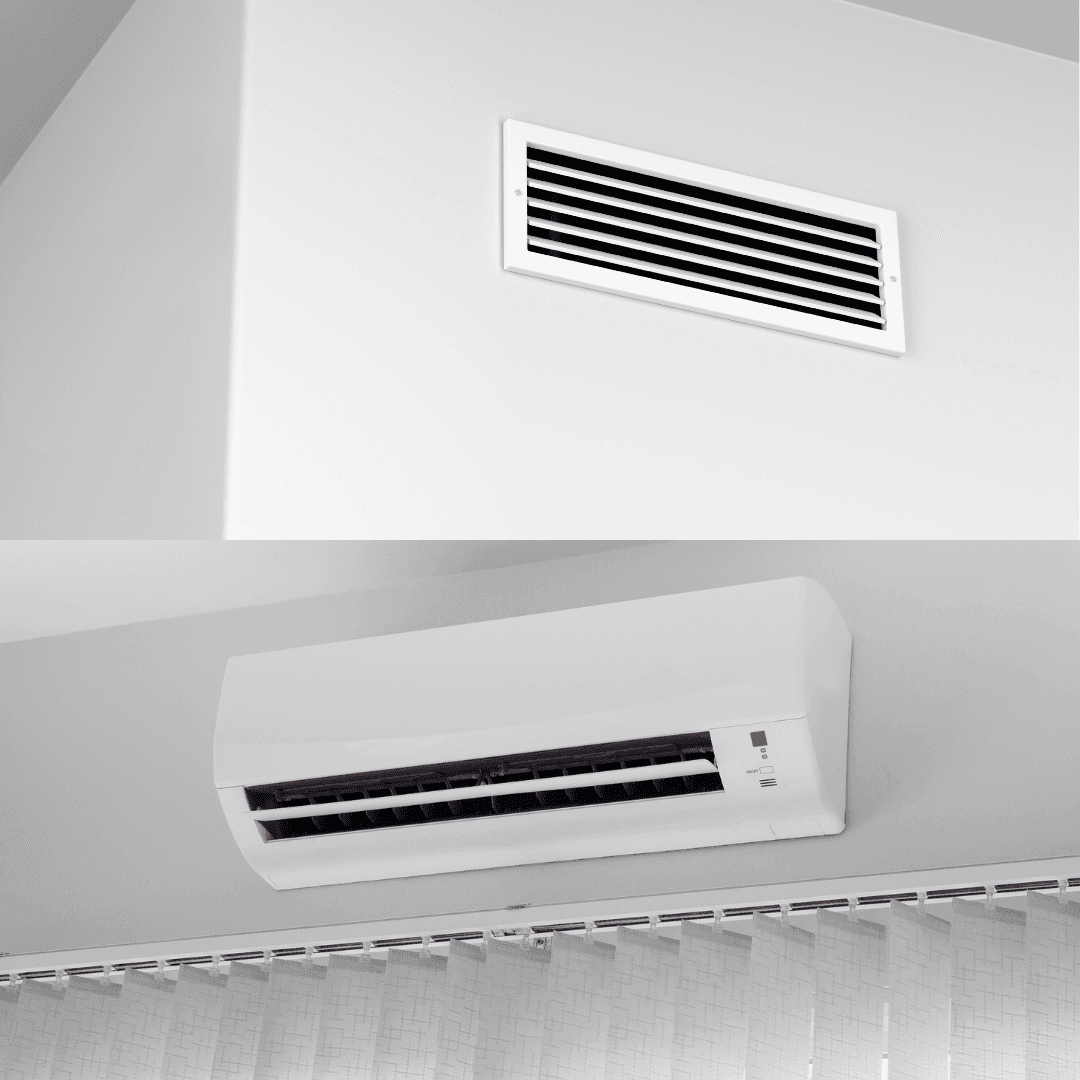
A split system air conditioner is usually designed to cool or heat one room or open-plan area. It has an indoor wall-mounted unit and an outdoor compressor.
A ducted air conditioning system uses a central indoor unit connected to ducts in the roof space or under the floor. Air is delivered through vents in different rooms, making it a more discreet option for multi-room comfort.
Here’s the simple version:
Choose split system air conditioning if you want to cool or heat one room, an apartment, a bedroom or a smaller living area.
Choose ducted air conditioning if you want a more discreet system designed for multiple rooms or larger homes.
Choose ducted air conditioning with smart zoning if you want more control, better comfort and the ability to reduce wasted energy by only cooling or heating the areas you are using.
Factor | Split system | Ducted |
|---|---|---|
Best suited to | Individual rooms and smaller homes | Multiple rooms and larger homes |
Upfront cost | Generally lower | Generally higher |
Appearance | Visible wall unit | Discreet ceiling vents |
Zoning | Individual units | Up to 10 zones with MyPlaceIQ |
Installation | Simpler | Requires suitable roof or underfloor space |
Control | Each unit controlled separately | Centralised and app-based control available |
What Is Ducted Air Conditioning?
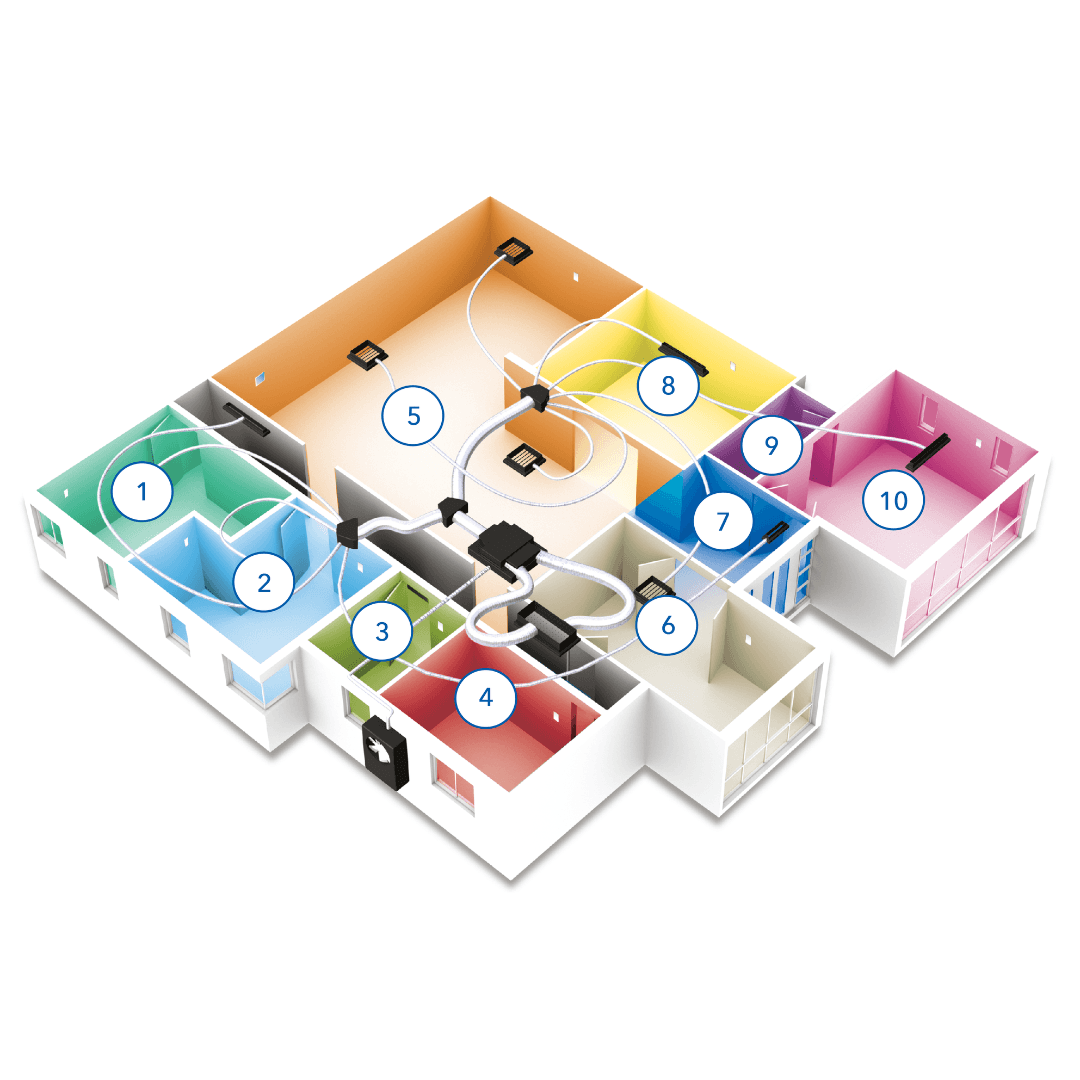
Ducted air conditioning uses a central indoor unit connected to a network of ducts installed in the roof space or under the floor. Conditioned air is distributed through vents in different rooms, creating a clean and discreet air conditioning solution.
Modern ducted systems can also include zoning, which allows different areas of the home to be controlled independently.
When combined with MyPlaceIQ smart zoning, homeowners can control up to 10 individual zones from their smartphone. This means you can cool the living areas during the day, keep bedrooms comfortable overnight and avoid wasting energy in rooms that are not being used.
Benefits of Ducted Air Conditioning
Discreet design
One of the biggest advantages of a ducted air conditioner is the clean appearance. Instead of having wall-mounted indoor units in each room, only subtle ceiling or floor vents are visible.
This makes ducted air conditioning a popular choice for homeowners who want comfort without adding visual clutter to their interiors.
Comfort across multiple rooms
Ducted systems are designed to deliver conditioned air across multiple areas of the home, making them well suited to larger homes, families and households using several rooms throughout the day.
Quiet indoor operation
Because the main equipment is generally located outside, in the roof space or away from living areas, ducted systems are typically quiet indoors compared to wall-mounted systems.
Zoning options
Many ducted systems can be divided into zones. This allows you to cool or heat selected areas rather than running air conditioning through every room at once.
With a smart zoning system like MyPlaceIQ, this can become even more flexible, giving you app-based control over up to 10 zones.
Premium home appeal
Ducted air conditioning is often seen as a premium feature because it offers discreet design, centralised control and multi-room comfort.
Considerations for Ducted Air Conditioning
Ducted air conditioning can be a great option, but it may not suit every home.
Higher upfront investment
Ducted systems generally cost more upfront than a single split system because they require more equipment, ductwork, vents and professional installation.
Installation requirements
Ducted air conditioning usually requires sufficient roof space or underfloor space for ductwork. Your home layout, roof design and existing services can all affect whether ducted is suitable.
Professional design is important
A ducted system needs to be properly designed for the size and layout of your home. Poor system design can affect airflow, comfort and energy efficiency.
Maintenance
Like any air conditioning system, ducted air conditioning needs regular servicing. Ducts, filters, vents and components should be checked to help maintain performance and air quality.
What Is Split System Air Conditioning?
A split system air conditioner has two main parts: an indoor unit mounted inside the room and an outdoor unit.
Split systems are usually designed to cool or heat individual rooms, bedrooms, home offices or open-plan living spaces. Each indoor unit typically operates independently, which can make split systems a flexible option for smaller homes or targeted comfort.
For larger homes, multiple split systems may be needed to provide comfort across different rooms.
Benefits of Split System Air Conditioning
Lower upfront cost for single rooms
Split systems are usually cheaper to purchase and install when you only need to cool or heat one room.
Flexible installation
Because split systems do not require ductwork, they can be installed in many different types of homes, including apartments, townhouses and existing homes where ducted air conditioning may not be practical.
Efficient for targeted comfort
Split systems can be energy efficient when used to cool or heat one room at a time. For example, if you only use a bedroom at night or a home office during the day, a split system may be a practical solution.
Independent room control
Each split system operates separately, allowing different rooms to be set to different temperatures if multiple units are installed.
Simple servicing
Split systems are generally easy to access for filter cleaning and routine maintenance.
Considerations for Split System Air Conditioning
Split systems can be a strong option for single rooms, but there are some limitations.
Visible indoor units
The indoor unit is mounted on the wall, which may not suit every home’s design or interior style.
Multiple units may be needed
If you want to cool or heat several rooms, you may need multiple split systems. This can increase the total installation cost, servicing requirements and visual clutter.
More manual control
Each split system is usually controlled separately, often with its own remote. This can become less convenient if you have multiple units throughout the home.
Uneven coverage
Split systems work best in the room or area where they are installed. Larger spaces, hallways or irregular layouts may experience uneven temperatures.
Indoor noise
Many modern split systems are quiet, but the indoor wall unit still operates inside the room, which may be noticeable depending on the model and fan speed.
Ducted vs Split System: Which Costs More?
When comparing ducted vs split system air conditioning, cost is one of the biggest factors.
A split system is usually more affordable upfront if you only need to cool or heat one room. However, if you need multiple split systems throughout the home, the total cost can increase quickly.
Ducted air conditioning usually has a higher upfront installation cost because it requires a central unit, ductwork, vents, zoning components and professional design. However, it may be more suitable if you want a discreet system designed for multiple rooms.
The final cost will depend on:
Home size
Number of rooms or zones
Roof space and installation complexity
Air conditioning brand and system size
Whether zoning is included
Whether smart controls are added
Existing electrical and building requirements
If your goal is to cool or heat one room, a split system may be the lower-cost option.
If your goal is multi-room comfort, discreet design and smarter control, a ducted system with zoning may offer better long-term value.
Ducted vs Split System Running Costs
Running costs depend less on the type of system alone and more on how the system is used.
A split system can be efficient when cooling or heating one room. However, if multiple split systems are running at the same time, energy use can increase.
A standard ducted system can also use unnecessary energy if it is cooling or heating rooms that are not being used. This is where zoning becomes important.
With MyPlaceIQ smart zoning, homeowners can control up to 10 zones and avoid running air conditioning in unused areas. Independent testing has shown MyPlaceIQ can help reduce ducted air conditioning energy use by up to 46% compared to running a standard ducted system without smart zoning.*
This means ducted air conditioning does not have to mean cooling or heating the whole home all the time. With smart zoning, you can tailor comfort to the way your household actually lives.
Smart Zoning: Where Ducted Air Conditioning Changes the Equation
Traditional ducted air conditioning gives you discreet multi-room comfort. But when paired with smart zoning, it becomes much more flexible.
This is where MyPlaceIQ can help.
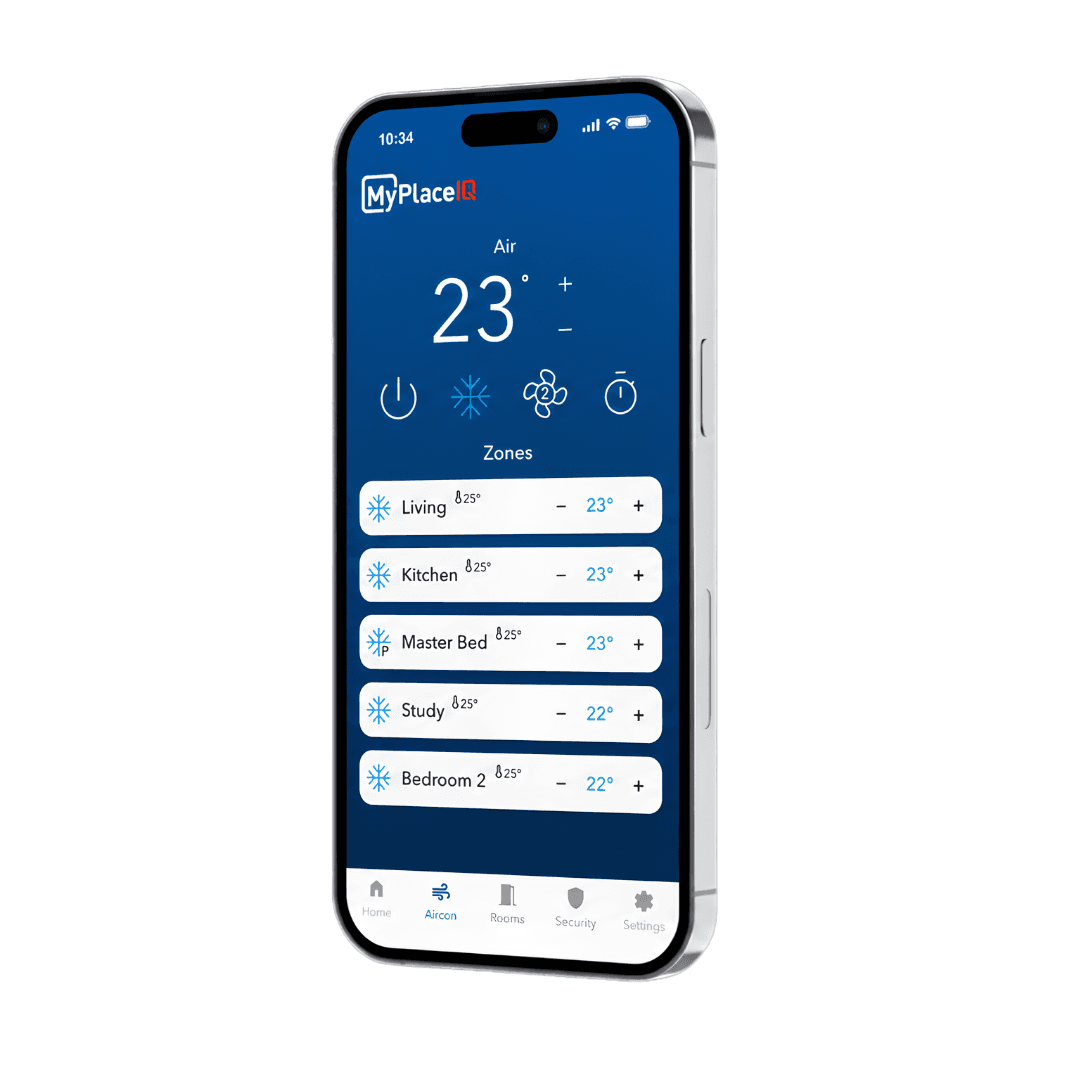
MyPlaceIQ turns compatible ducted air conditioning into a smarter, more efficient system by giving you control over different areas of the home from the MyPlaceIQ app.
With MyPlaceIQ, you can:
Control up to 10 zones
Adjust your air conditioning from your smartphone
Set schedules around your household routine
Cool or heat the rooms you are using
Avoid wasting energy in unused areas
Pre-cool or pre-heat your home before you arrive
Keep bedrooms comfortable overnight without conditioning unnecessary areas
This makes ducted air conditioning more than a central comfort system. It becomes a flexible, app-controlled solution that can adapt to the way your household uses the home.
At a Glance: Split System vs Standard Ducted vs Ducted + MyPlaceIQ
Feature | Split System | Standard Ducted | Ducted + MyPlaceIQ |
Best for | Single rooms, apartments and smaller spaces | Larger homes and multi-room comfort | Larger homes wanting smart zoning, app control and energy efficiency |
Coverage | One room or open-plan area per unit | Multiple rooms through ductwork | Multiple rooms with up to 10 smart zones |
Appearance | Visible wall-mounted indoor units | Discreet ceiling or floor vents | Discreet vents with smart app-based control |
Upfront cost | Lower for one room | Higher upfront | Higher upfront, with added smart control benefits |
Running cost factors | Efficient for single rooms, less efficient if many units run at once | Can waste energy if cooling or heating unused rooms | Smart zoning helps reduce wasted energy |
Control | Each unit controlled separately | Central control, depending on system setup | Up to 10 zones controlled from your phone |
Flexibility | Add units over time | Designed as one central system | Room-by-room zone control through the app |
Noise | Some indoor noise from wall unit | Quiet indoor operation | Quiet indoor operation |
Smart features | Varies by model | Often limited | App control, zones, schedules and lifestyle settings |
Which Air Conditioning System Is Best for Your Home?
The best air conditioning system depends on your home, budget and lifestyle.
Choose ducted air conditioning with MyPlaceIQ if:
You want discreet multi-room comfort
You have a larger home or family household
You want smart zoning with up to 10 zones
You want to control your air conditioning from your phone
You want to reduce wasted energy in unused rooms
You want a premium system designed for long-term comfort
You want smarter control over how and when your home is cooled or heated
Choose split system air conditioning if:
You live in an apartment or smaller home
You only need to cool or heat one room
You want a lower upfront cost
Your home does not have suitable roof space for ductwork
You prefer to add air conditioning units over time
You are comfortable controlling each unit separately
When choosing between split system vs ducted air conditioning, consider how many rooms you want to condition, your available installation space, your budget and the level of control you want.
The Smart Choice for Australian Homes
Both ducted air conditioning and split system air conditioning can deliver reliable comfort, but they suit different needs.
Split systems are often a practical option for single rooms, apartments and smaller spaces. Ducted air conditioning is generally better suited to larger homes and households wanting a discreet system for multiple rooms.
But when ducted air conditioning is paired with MyPlaceIQ smart zoning, it becomes a smarter and more flexible solution.
With up to 10 zones, smartphone control and proven energy savings of up to 46%, MyPlaceIQ helps you tailor comfort to your lifestyle while reducing wasted energy.
Ready to compare smart ducted air conditioning options for your home?
Find a local MyPlaceIQ installer and discover how zoning, app control and smarter energy use could help improve comfort in your home.
FAQs: Ducted vs Split System Air Conditioning
Is ducted air conditioning better than split system air conditioning?
Ducted air conditioning is often better for larger homes or households wanting discreet comfort across multiple rooms. Split systems may be better for apartments, smaller homes or single-room cooling.
Is ducted air conditioning more expensive to run than split systems?
It depends on how the system is used. A standard ducted system can use more energy if it is cooling or heating rooms unnecessarily. However, ducted systems with zoning and smart controls can help reduce wasted energy by only conditioning the areas being used.
Can ducted air conditioning control different rooms separately?
Yes, many ducted systems can be set up with zones. With MyPlaceIQ, homeowners can control up to 10 zones from the MyPlaceIQ app.
Are split systems good for whole-home cooling?
Split systems can cool individual rooms or open-plan areas well, but larger homes may need multiple indoor units. This can increase installation costs, visual clutter and maintenance requirements.
Which air conditioning system is best for Australian homes?
For larger family homes, ducted air conditioning with zoning is often a strong option. For smaller homes, apartments or single-room comfort, split systems may be more practical.
Does MyPlaceIQ work with split system air conditioning?
MyPlaceIQ is designed for compatible ducted air conditioning systems. It gives homeowners smart zoning, app control and energy-saving features for ducted air conditioning.
How many zones can MyPlaceIQ control?
MyPlaceIQ can control up to 10 zones, allowing homeowners to manage comfort across different areas of the home from the MyPlaceIQ app.
Can smart zoning help reduce air conditioning energy use?
Yes. Smart zoning can help reduce wasted energy by allowing you to cool or heat the rooms you are using, rather than conditioning unused areas. Independent testing has shown MyPlaceIQ can reduce ducted air conditioning energy use by up to 46% compared to running a standard ducted system without smart zoning.*
Disclaimer
*Energy savings of up to 46% are based on independent testing comparing MyPlaceIQ smart zoning with a standard ducted system without smart zoning. Actual savings may vary depending on home size, system design, usage patterns, climate, energy tariffs and installation.